
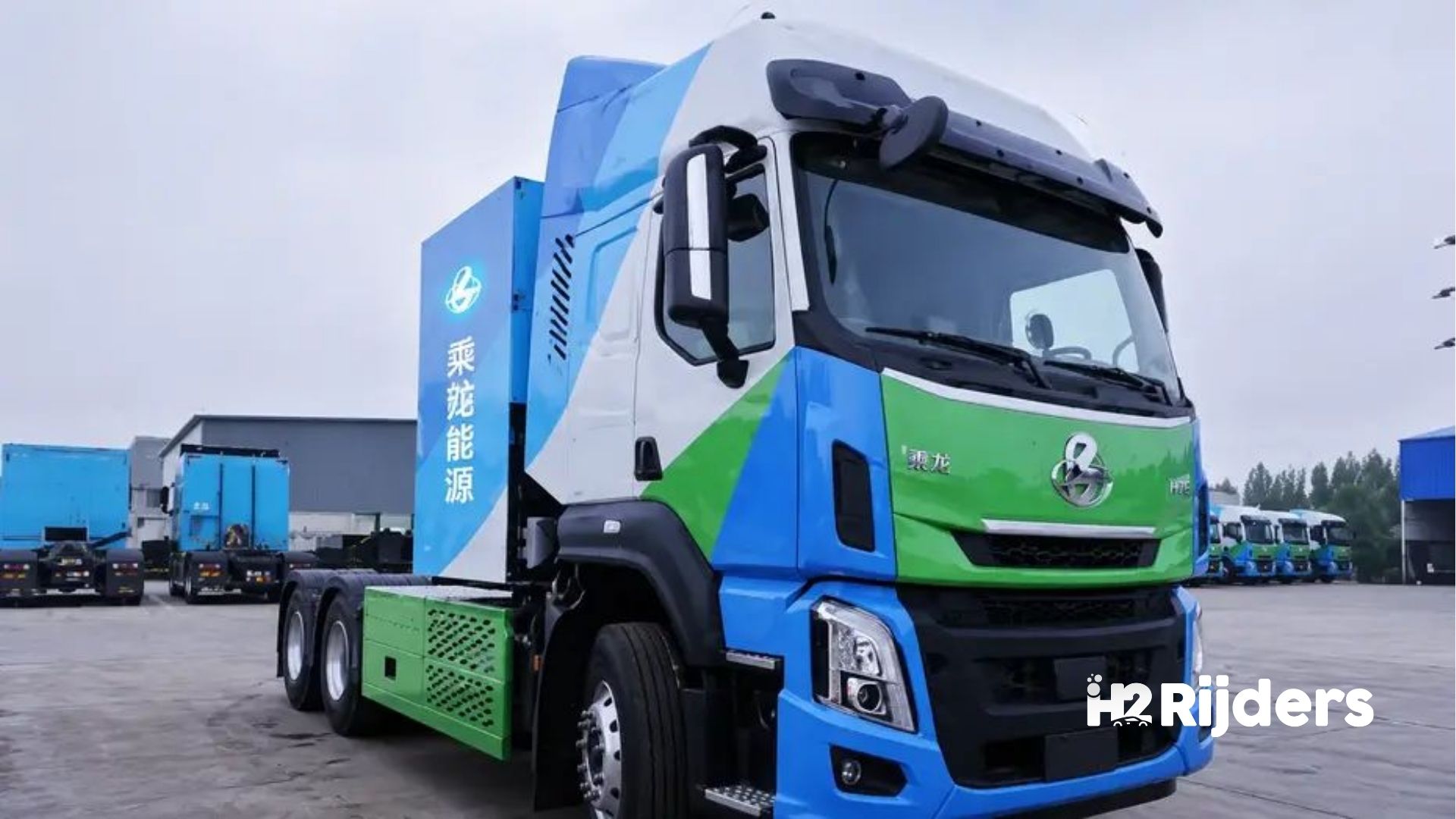
BYD Enters Hydrogen: Subsidiary Fudi Supplies Fuel Cell Systems for GAC Trucks
BYD Quietly Enters the Hydrogen Market
BYD, the world's leading electric vehicle manufacturer, has taken its first concrete step into the hydrogen market through a subsidiary. Taizhou Fudi Battery — part of BYD's component division Fudi — has supplied an approximately 80-kilowatt PEM fuel cell system for two GAC Lingcheng trucks. The vehicles have been listed in the 408th round of China's official vehicle announcement by the Ministry of Industry and Information Technology (MIIT), meaning they are approved for sale on the Chinese market.
The system involved is the Linghang YTM80A, a proton exchange membrane (PEM) fuel cell engine. PEM is the dominant technology in heavy-duty hydrogen transport: compact, reliable and suited to demanding long-haul operation.
Years of Ambivalence
BYD's stance on hydrogen had long been equivocal. The company positioned itself as the champion of lithium iron phosphate (LFP) batteries and its blade battery technology, and CEO Wang Chuanfu made several public statements expressing scepticism about fuel cell technology. At the same time, BYD remained quietly active: the FinDreams/Fudi divisions were set up precisely to supply components to third parties, including outside the BYD vehicle portfolio.
The MIIT listing via Fudi is therefore a deliberate move — entering the hydrogen market without directly linking the BYD brand to it, at least for now.
China's Hydrogen Market Is Scaling Fast
The timing is not coincidental. In 2026, the Chinese government sharpened its hydrogen ambitions further: a policy package from MIIT and two other ministries mandates that urban clusters achieve large-scale, diverse hydrogen deployment by 2030, with a target retail hydrogen price of no more than 25 yuan per kilogram. The national goal: 100,000 fuel cell vehicles in operation by 2030. By end-2025, around 40,000 were already on the road.
GAC Lingcheng had already made its mark as a hydrogen truck supplier: in January 2026, the company delivered 340 hydrogen vehicles in a single batch, primarily for the Greater Bay Area in southern China.
What This Means
BYD's entry into the fuel cell market — however quiet — is a significant signal. As the world's largest new-energy vehicle producer, BYD commands the manufacturing scale, supply chain and financial resources to ramp up rapidly once market conditions justify it. The fact that Fudi Battery is reportedly eyeing a stock market listing fits the same pattern: it broadens the capital base for further investment.
For BYD, hydrogen and battery-electric are not in competition — they extend the portfolio of a company that intends to serve every dimension of zero-emission mobility.
Sources:
- LinkedIn post FuelCellsWorks, based on MIIT 408th vehicle announcement (China)
- Gasgoo — China targets 100,000 fuel cell vehicles by 2030 (April 2026)
- Wikipedia — BYD Company / FinDreams (Fudi) division
- FuelCellsWorks — GAC Lingcheng delivers 340 hydrogen fuel cell vehicles (January 2026)


