
China electrifies heavy freight route by route: battery-electric and hydrogen each find their territory
China is the world's largest laboratory for zero-emission freight. A recent analysis in the internal magazine of state-owned energy giant Sinopec offers a glimpse of how that market is evolving: battery-electric trucks are gaining ground rapidly, while hydrogen shows its strength above all in long-haul and heavy-duty operations.
What Sinopec observes
According to Sinopec's analysis, battery-electric trucks in China increasingly take over deployment scenarios once considered typical hydrogen territory: medium-to-heavy loads over longer distances. The main driver is the rapid rollout of charging and battery-swapping infrastructure. With battery swapping, a truck exchanges an empty battery for a full one in a matter of minutes, narrowing the time gap with refuelling.
The numbers underline the pace. China targets 1.6 million new energy heavy-duty vehicles by 2030. Battery-electric trucks now reach cost parity with diesel on fixed regional routes, while hydrogen trucks were still around 35 percent more expensive than diesel in 2024, according to the International Energy Agency — mainly due to the price of hydrogen and infrastructure that is still being built out.
Hydrogen keeps its own playing field
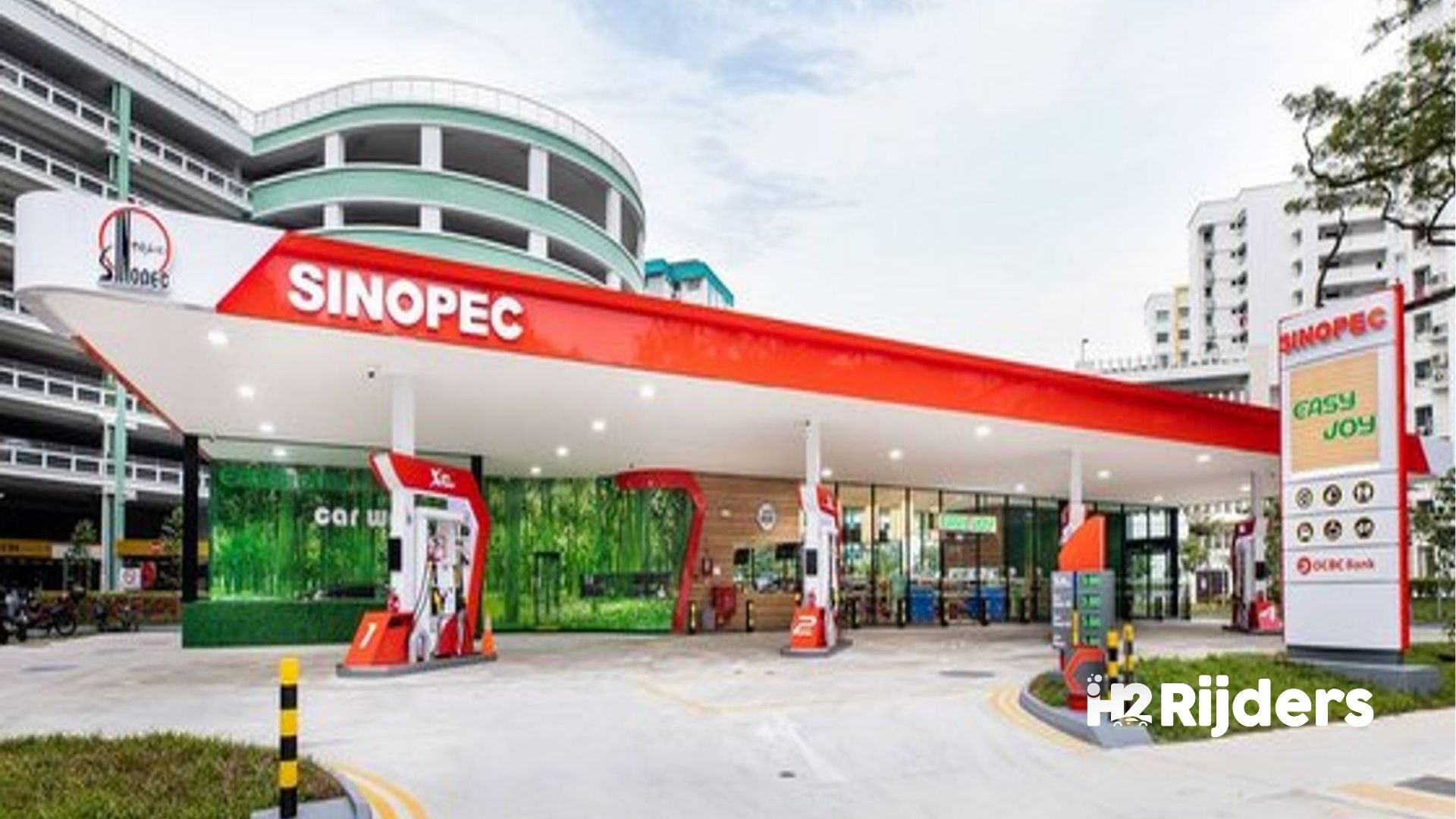
Remarkably, that same Sinopec is the world's largest operator of hydrogen refuelling stations. The company runs 144 stations and built seven hydrogen corridors, including a 1,150-kilometre route from Chongqing via Guizhou to the port of Qinzhou. Since April 2025, hydrogen trucks run daily services there carrying chemical products, electronics and car parts. In its own analysis, Sinopec also sees a lasting role for hydrogen in long-haul transport, where fast refuelling, long range and cold-weather performance make the difference.
Scientific research confirms this division of labour. A life-cycle study in Environmental Science & Technology models three powertrains for Chinese heavy trucks and concludes: battery-electric performs best on regional routes, the fuel cell on longer distances with lower loads, and the hydrogen combustion engine where high power output is required. Three zero-emission solutions, each with its own optimum.
Green hydrogen as the foundation
Meanwhile, Sinopec invests heavily on the production side. In Kuqa (Xinjiang), the company built one of the world's largest green hydrogen plants: electrolysers running on solar power with a capacity of 20,000 tonnes per year. China thus links the scale-up of hydrogen trucks directly to renewable production.
What does this mean for Europe?
The Chinese lesson is not that one technology defeats the other, but that the market chooses per application. For Europe, an additional factor comes into play that matters less in China: grid congestion. Where heavy grid connections face waiting lists of several years, hydrogen offers logistics companies a zero-emission route that relieves the power grid. Battery-electric and hydrogen replace diesel together — each where it fits best.
Sources:
• Hydrogen Insight – Hydrogen trucks face growing battery-electric threat in China's heavy-freight market: Sinopec (July 2026)
• Electrek – analysis of the Sinopec report (July 2026)
• Fuel Cells Works – Battery swapping puts pressure on hydrogen trucks as China targets 1.6 million new energy heavy-duty vehicles by 2030 (July 2026)
• ECHEMI / Yicai – Sinopec hydrogen corridor Chongqing–Qinzhou and refuelling network (2025)
• Environmental Science & Technology – Life Cycle Economic and Environmental Assessment for Emerging Heavy-Duty Truck Powertrain Technologies in China


