
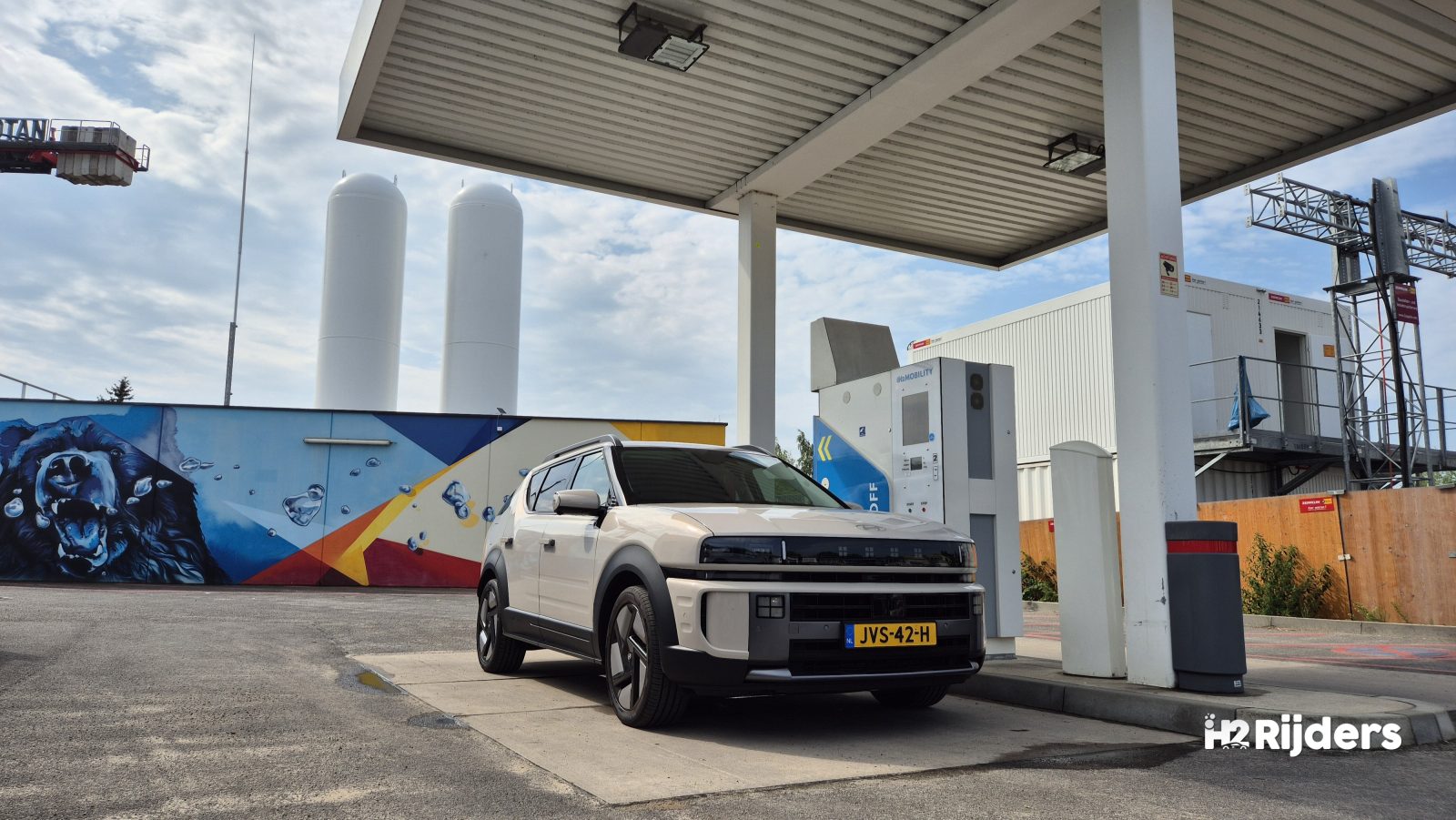
Long-term test Hyundai Nexo II: 2,700 kilometres across Europe
Is the new Nexo a good choice? We took it on a long-term test — 2,700 kilometres towards Poland and Czechia — and lined up the plusses and the minuses.
Technology
The biggest improvement sits under the bonnet: system output (fuel cell plus battery) has gone up from 120 to 190 kW. In old-fashioned horsepower: from 163 to just over 250. You notice it immediately. This thing now has serious Überholprestige, as our eastern neighbours so nicely put it: the authority to overtake. That turned out to be very welcome on the back roads of Poland and Czechia.
Other things today's Nexo driver cares about:
- an automatic rain sensor — tick;
- a tow bar, good for 1,000 kg;
- and a mobile power socket: no less than 3.6 kW through a port on the right-hand side, where you can plug in an ordinary plug.
That V2L connection is called camping mode. Anyone who can still picture the launch video of the first Nexo knows that it closed out in nature: the Nexo next to a caravan, and inside that caravan the light coming on. All of those things prompted questions and pleas, and there you have it: Hyundai has answered them.
Looks
Let me get straight to the point: you either find it beautiful or you find it ugly. There is no middle ground. The Breaking Bad comparisons about the rear end were everywhere.
And that is actually a good sign: a car you like instantly usually does not age all that well design-wise. The Nexo II is like a good wine, it needs to be kept waiting a while first. In the flesh I find it better looking than in photographs. Walk around it and let your eyes feast. Park the car near a terrace in the evening and watch it for a couple of hours.
A setting sun plays with light and shadow and, quarter of an hour by quarter of an hour, emphasises different aspects of the design. A dark band runs across the rear that suggests the shape of a cinched cushion. Should you decide to buy a Nexo: spend some time on the colour choice. A light colour gives the car a completely different presence than a dark one.
Interior
True beauty is on the inside, and that goes for the Nexo II as well. In design and finish the interior is a giant step forward compared with its predecessor. The seats were already very good; these are better still. One improvement that stands out for me is the headrest: it is simply blissful.
Although the dimensions of the two Nexos are close together, the Nexo II feels roomier, especially in the boot. Plenty of room, sir!
Studying the controls, it is noticeable that the audio and cruise control clusters have swapped places compared with its predecessor.
Plus points go to the one-pedal drive: set it once and the car remembers. Anyone used to this does not want anything else. Auto Hold too, for when you are not using one-pedal drive, is remembered by the car. In the old Nexo you have to set that again after every start.
Unfortunately the new Nexo has its weaker sides as well. The straitjacket of five NCAP stars goes too far for me. I am used to holding the wheel lightly; you feel more that way than with white knuckles. In the Nexo I that is no problem, but the Nexo II is quick to shout that I should hold the wheel. Through a camera on the steering column it keeps an eye on my face. It does not like what it sees, because I see a little red light blinking constantly. And constantly I am advised to take a coffee break. It is so irritating that I lower the steering wheel so the blinking light is hidden from view.
That steering wheel sits very nicely in the hand, by the way; that has to be said too.
On the road
The Nexo's predecessor was the ix35 Fuel Cell: a lovely touring car, but it understeered considerably. The Nexo steered a great deal better, and the new Nexo shows itself to be a true master. Whatever happens, however you turn in and however and whenever you apply power: you always feel that the front wheels have traction. There are only two ways left to improve this car: lower and lighter.
If we may: Hyundai, would you please also build a two-seater on a shorter wheelbase with Nexo technology?
Consumption
The new generation of fuel cell promised both more power and more efficiency. A seemingly contradictory combination, but it delivers. What stands out is that in city traffic it is very easy to drive more economically than in the Nexo I. There I regularly saw 0.7 kg/100 km on the display, and just occasionally even 0.6. In steady traffic at around 100 km/h I get 0.8, the same as I manage in my own Nexo I, and at higher speeds — in Poland I was allowed 140 km/h — it again seemed more economical than the Nexo I.
That can be explained by a different fuel cell characteristic, a larger battery — which is the case — and better aerodynamics. On closer inspection of the bodywork, quite a few details turn out to be flatter and therefore smoother on the new Nexo.
Averaged over the whole trip I score 1.0 kg/100 km. Given my driving style — well above 100 where it was allowed, alternated with a few economy runs in the city and the hills — I consider that a decent performance.
Infrastructure
The choice of a trip to Poland was driven by curiosity about the Polish network: a network of 27 filling stations is being rolled out there in a short space of time. They have been placed cleverly: the first stations are some 300 kilometres apart. Around busy port cities such as Gdynia and Gdansk several stations sit close together. As more stations are added the network becomes finer-meshed, and you have to think less about where and when you refuel.
The Nexo has a tank of 6.7 kg. A good 600 kilometres per tank is comfortably achievable, without having to make any real effort.
The filling stations in Poland performed well, despite temperatures well above thirty degrees Celsius. Notable: in Poland you usually pay in the shop. Also notable: the station in Gdansk is dedicated to hydrogen, seems to be aimed mainly at trucks and, in its layout, is strongly reminiscent of the CMB.Tech station in Antwerp.
Six stations along the way, from Herten to Gdansk:
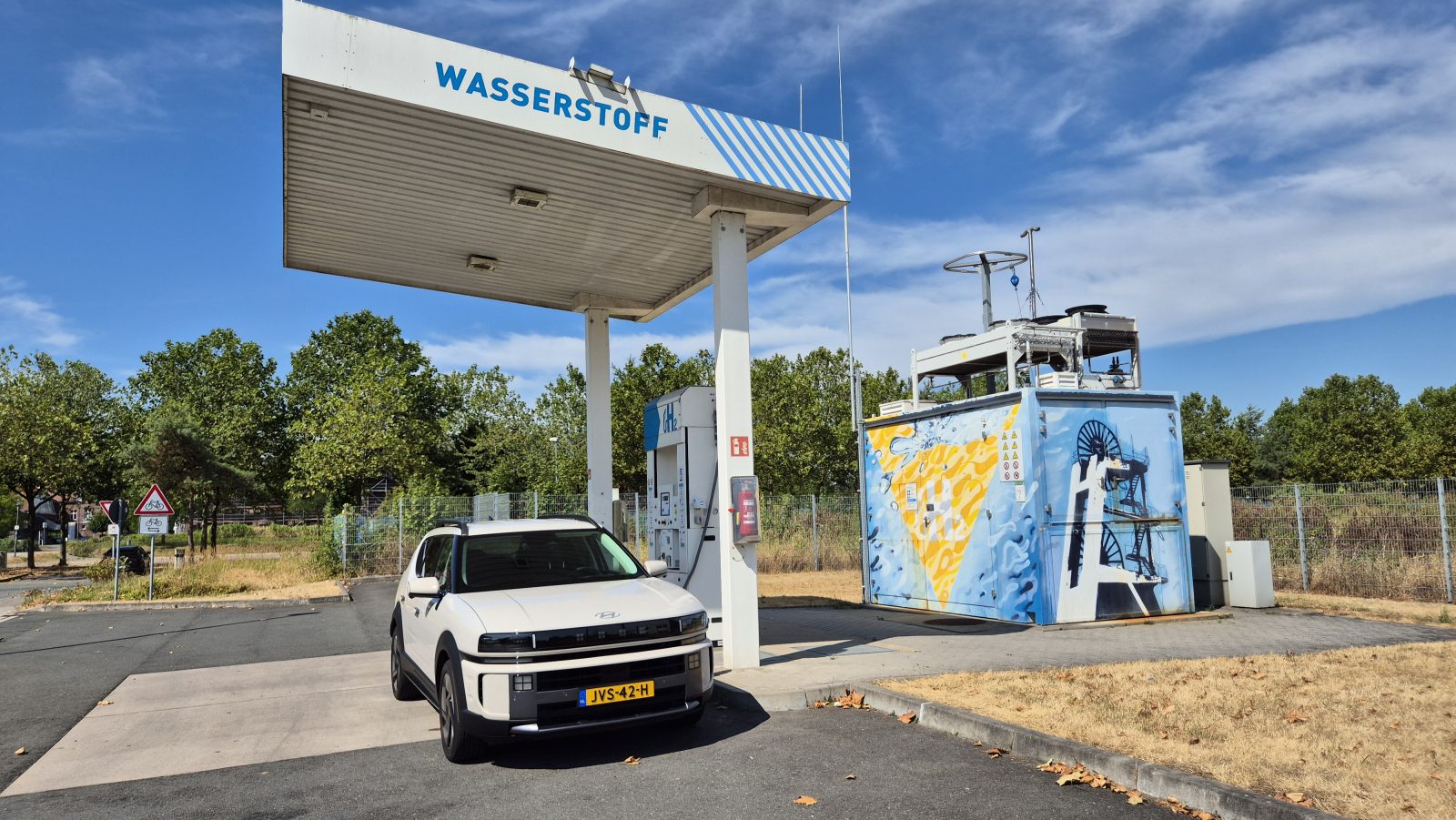 DE · 01 / 06
Herten — hydrogen with a mining past
The first station across the border. The graffiti of a mineshaft headframe gives away where you are. Its own canopy, its own dispenser: hydrogen has been given its own place here.
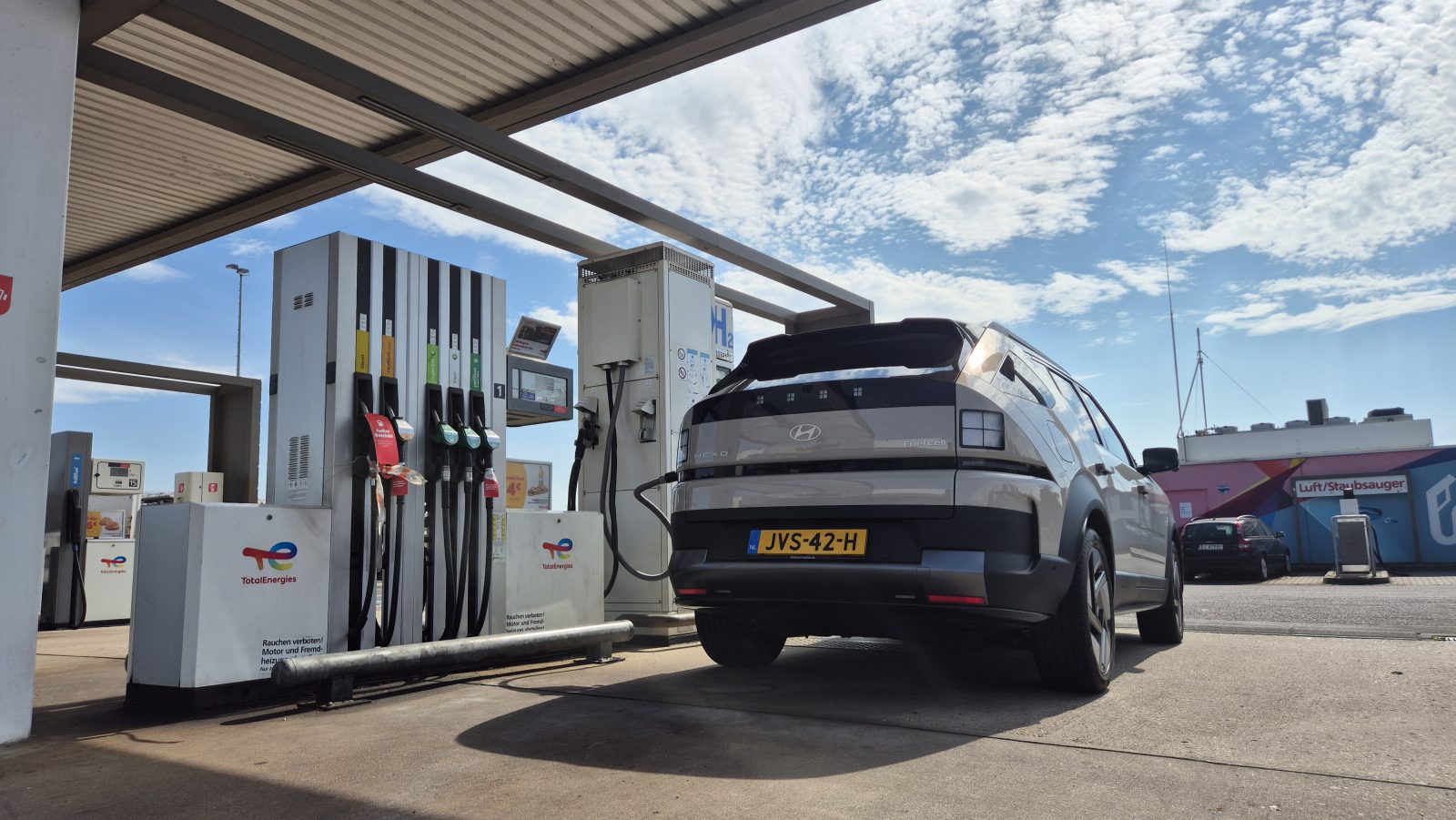 DE · 02 / 06
Magdeburg — TotalEnergies
Nozzle out, fill up, drive on. The most ordinary thing in the world — exactly how it should be once a network matures.
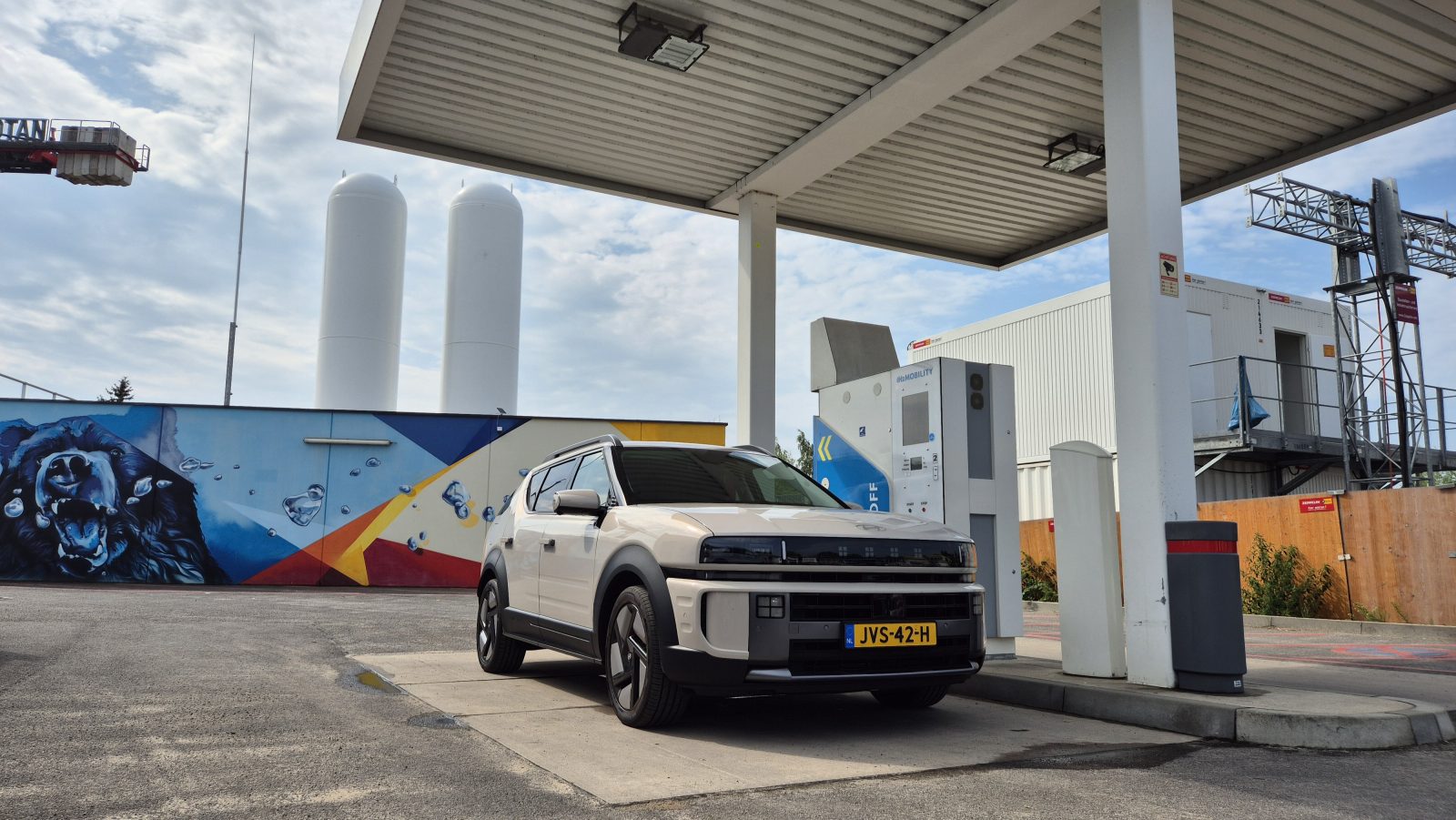 DE · 03 / 06
Berlin-Tempelhof
The bear on the wall leaves no doubt where you are. Two storage tanks, one dispenser, done: a compact installation that does its job briskly.
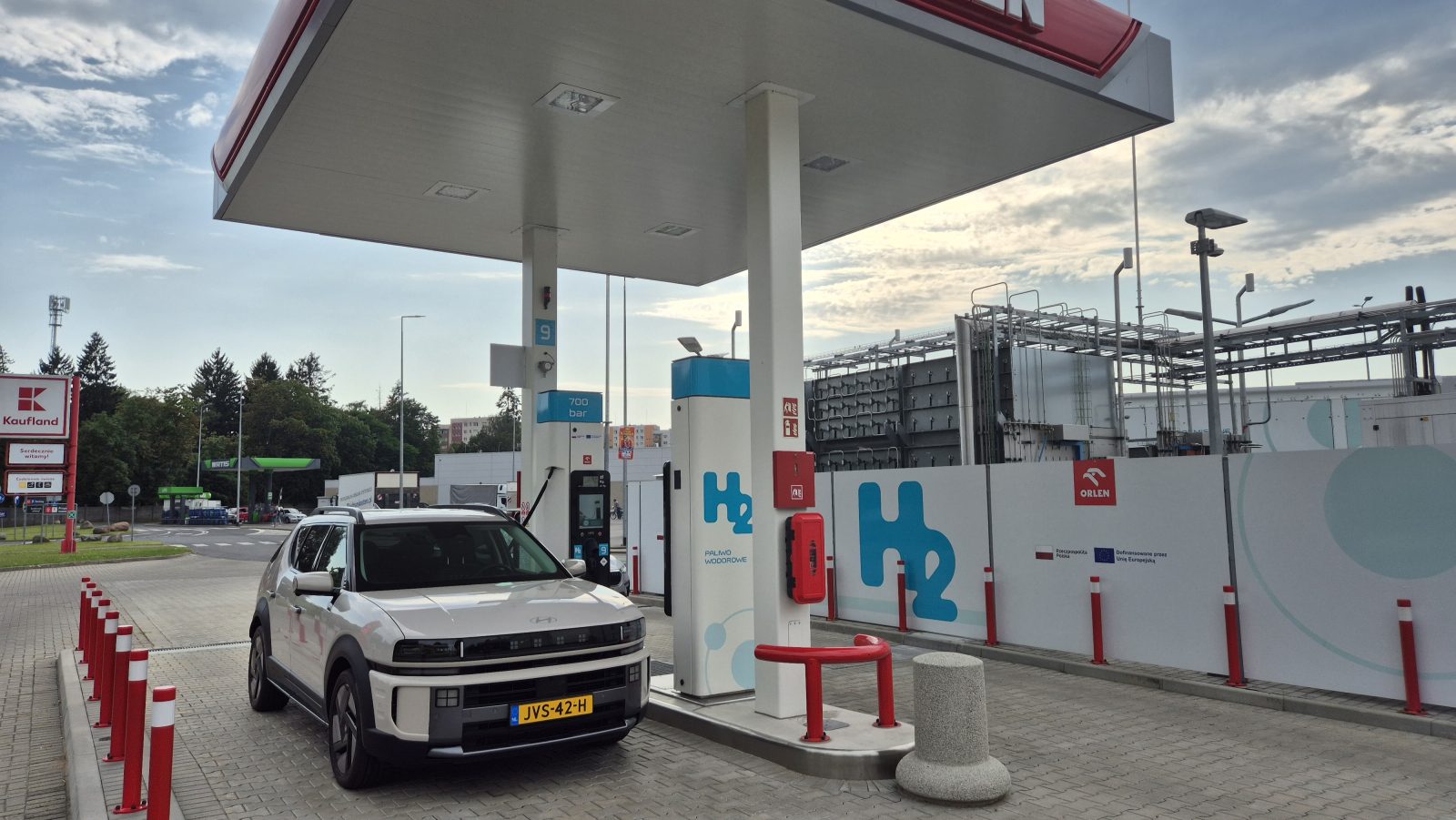 PL · 04 / 06
Pila — Orlen, 700 bar
The first Polish station on the route, right next to the Kaufland. Three to four minutes to fill up, even well above thirty degrees.
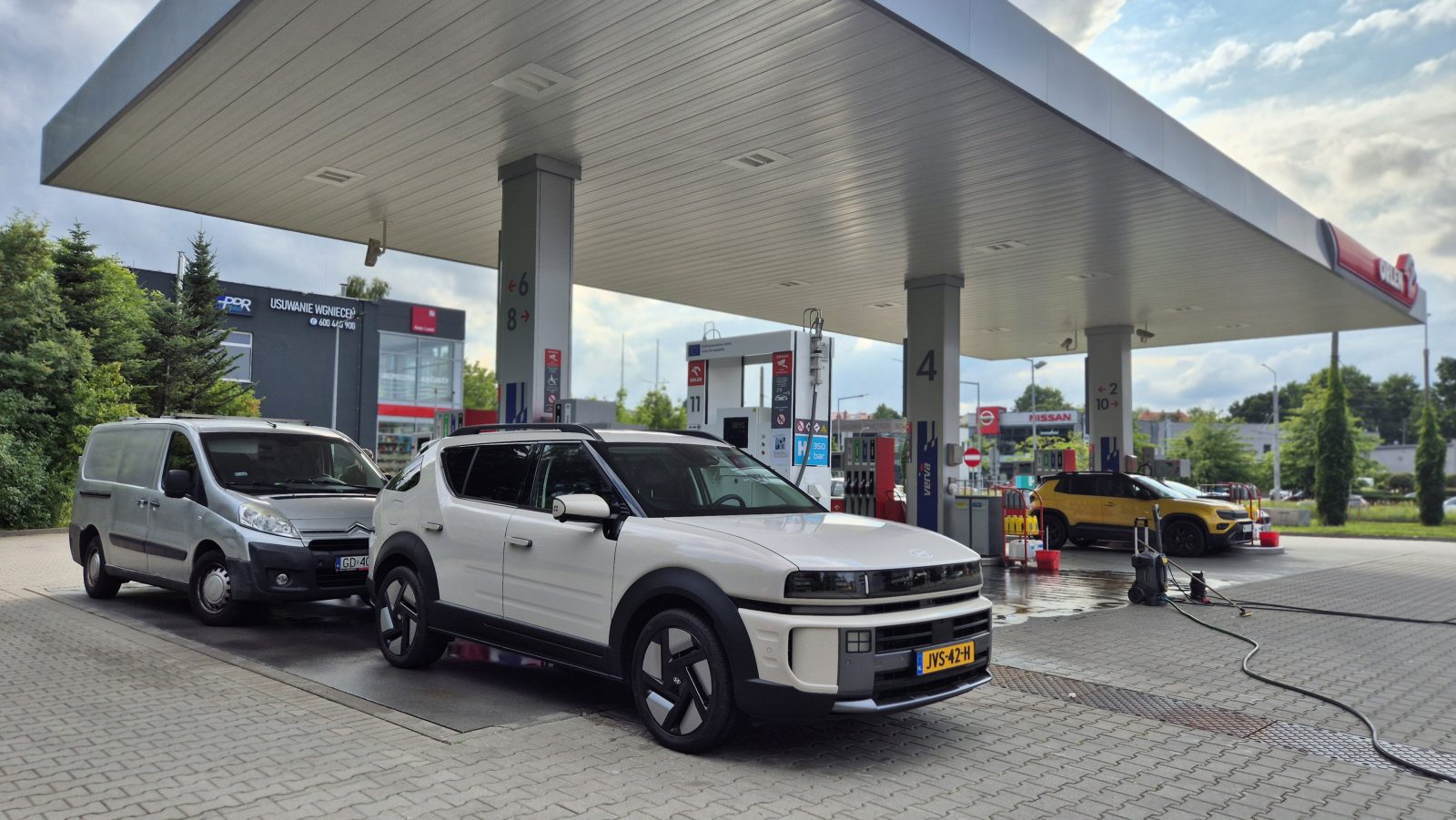 PL · 05 / 06
Gdynia — Orlen
The hydrogen dispenser simply stands between diesel and petrol under the same canopy. In Poland you usually pay inside, in the fuel shop.
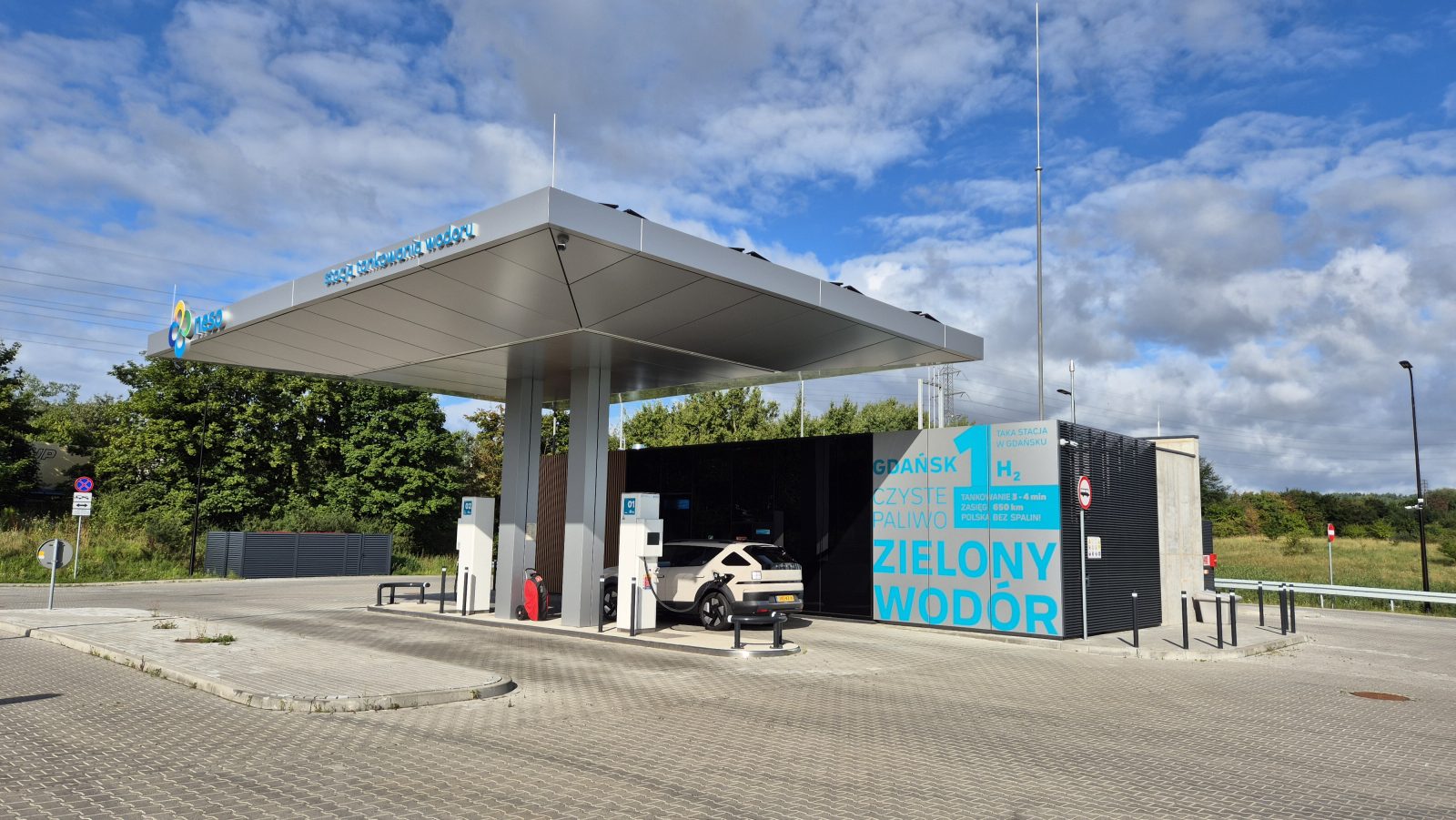 PL · 06 / 06
Gdansk — NESO
The end of the outbound leg. Dedicated hydrogen: here you fuel nothing else. Aimed mainly at trucks and, in its layout, strongly reminiscent of the CMB.Tech station in Antwerp.
The money
All that beauty comes at a price, surely? The Nexo starts at € 72,495. In the Netherlands the hydrogen price varies between € 14.40 and € 25.00 per kilo, although that last figure is a considerable outlier.
For the 2,700 kilometres covered I spent € 422 in total, converted. A little over 15 eurocents per kilometre. Slightly cheaper than petrol, slightly more expensive than diesel.
Verdict
The Nexo does win you over. The car performs well on every front, and slightly too well on safety systems. A considerable sum has to be put on the table before you may call yourself a Nexo driver. But then you have something exclusive, and a car that gets you into conversation.
Driving on hydrogen still meets with quite some resistance from some people. It is not as black and white as "will it be hydrogen or electric?". Our view: go electric wherever you can. That means the Nexo will not become mainstream. The Nexo is for someone who enjoys pioneering.
And hydrogen is not going to become the norm either. But now that the electricity grid is creaking at every seam, we need more than one solution. Mobility needs only a fraction of the hydrogen that industry already uses today. Before trucks run in daily operation on a large scale, everyone wants to be sure the hydrogen network is up to it. Passenger cars are an ideal and easy way to test exactly that.
The plusses
- Looks
- Interior
- Space
- Performance
- Efficiency
- Rain sensor
- Tow bar
The minuses
- Safety systems are irritating
- No sunroof available
Sources
- Own measurements and observations during the H2 Rijders long-term test, 2,700 kilometres through the Netherlands, Germany, Poland and Czechia.
- Hyundai Netherlands, press release "Nieuwe Hyundai NEXO: krachtiger, efficiënter, verfijnder" (hyundai-pers.nl).