
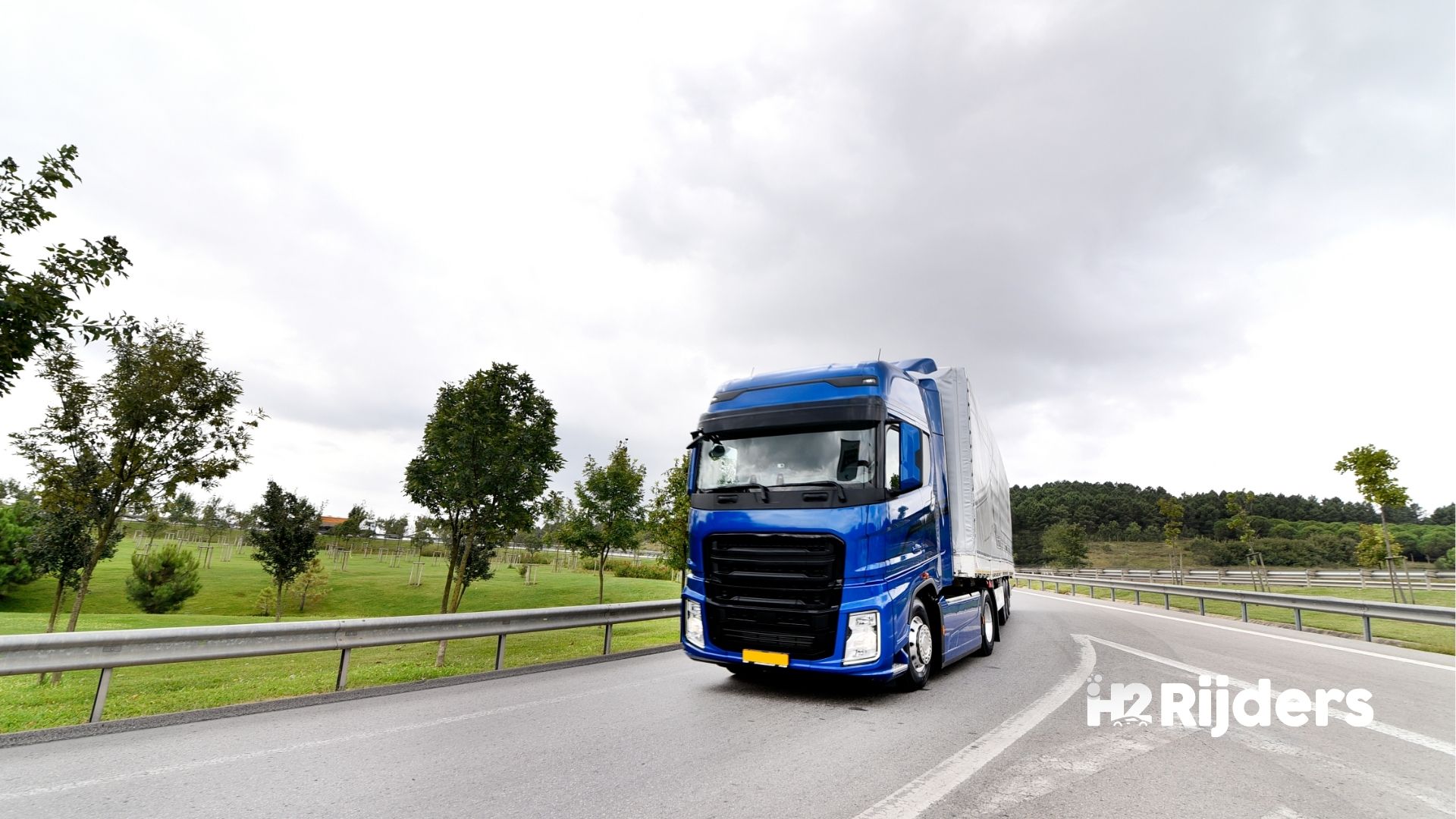
Dutch Truck Toll From 1 July: Diesel Trucks Pay Six Times More Per Kilometre Than Hydrogen Trucks
Two Rate Worlds From 1 July 2026
On 1 July 2026, the Dutch truck toll (vrachtwagenheffing) enters into force. All trucks above 3,500 kg will from that date pay per kilometre driven on virtually all motorways and part of the provincial road network. The rate depends on weight class and CO2 emission class.
The figures are concrete. A standard diesel truck pays an average of 19.1 cents per kilometre. A zero-emission truck -- fully electric or hydrogen-powered -- falls into the lowest CO2 class (class 5) and pays 3.3 cents per kilometre. That is a factor of six. For a truck covering 500 kilometres per day, the gap amounts to over 780 euros per month compared to a diesel equivalent.
The toll replaces the Eurovignette and the road tax for trucks up to 12 tonnes. Revenues are largely recycled back into the transport sector: the multi-year reinvestment programme earmarks 1.6 billion euros for decarbonisation, including the purchase subsidy for zero-emission trucks (AanZET) and the Hydrogen in Mobility subsidy scheme (SWIM).
ERE System Lowers the Net Cost of Green Hydrogen
Alongside the truck toll, the new ERE system has been in force since 1 January 2026. ERE stands for Emission Reduction Unit -- the new Dutch instrument replacing the old volume-based blending obligation for fuel suppliers. Where suppliers previously used cheap bulk biofuels to meet their targets, the new system measures the precise carbon footprint of each fuel from source to wheel.
This makes compliance more expensive for diesel suppliers, and those costs are passed on to end users. At the same time, vehicles running on green hydrogen generate ERE credits, because they produce no CO2 emissions. Those credits are tradeable: fossil fuel suppliers must purchase them. The result is that the net cost of green hydrogen at the pump is lower than the bare production price would suggest.
No Overnight Fleet Overhaul
This is not an argument for an immediate fleet switch. Hydrogen trucks carry higher purchase costs than diesel vehicles, and the refuelling network in the Netherlands is still being built out. A temporary discount of 22.3% on the truck toll also applies from September to December 2026, introduced by the government in response to higher fuel prices caused by geopolitical tensions.
But the policy direction is clear. In 2027, the European ETS2 system arrives, directly taxing the CO2 emissions from fuel combustion. Zero-emission zones in Dutch cities are expanding. The truck toll increases annually with inflation.
For fleet managers currently planning replacement investments, these are no longer abstract future scenarios. They are concrete cost items that will appear in operating accounts from 1 July onwards.
Sources:
- Rijksoverheid / vrachtwagenheffing.nl -- official rates 2026
- BOVAG -- truck toll dossier (May 2026)
- evofenedex -- truck toll from 1 July 2026
- TLN -- CO2 classes and rates
- Vrachtwagenheffingsbeleid.nl -- Ministry of Infrastructure and Water Management


